Go deeper with GlobalData


Access deeper industry intelligence
Experience unmatched clarity with a single platform that combines unique data, AI, and human expertise.
The conversation around ESG is evolving, and for the better. For some organisations, ESG has been seen as a regulatory obligation – something they react to, try to comply with, and never fully embrace. But there is increasing awareness that, rather than a compliance exercise or a reputation enhancing ‘nice-to-have’, ESG has become a business imperative – something that is vital for access to commercial opportunities, capital, talent and growth.
Studies have consistently shown that organisations which embed ESG as a core component of their growth plans can achieve significant competitive advantage over their rivals. For instance, research published in the International Journal of Climate Change Strategies and Management found that ESG practices enhance financial stability and market appeal. This is because investors, clients and employees – both current and prospective – now expect visibility and assurance of ESG commitment.
Today, ESG influences the choices companies make about who to do business with, how to attract people, where to invest, and how to operate their business. One survey of procurement professionals found that two thirds (64%) of respondents said ESG was now an important part of their company strategy, and more than half said they have a sustainable and ethical procurement policy. Supply chains are being reassessed with governance and sustainability as key criteria, and so treating ESG as a brand-building exercise is no longer sufficient.
From attracting top talent, to satisfying investors, and meeting procurement criteria, a comprehensive ESG strategy is now necessary for organisations to remain resilient and competitive. As such, given its significant impact on business performance and growth, ESG needs to be treated as a core business function; forward-looking and grounded in intent, with commercial impact in mind as much as compliance and CSR. Therefore, a holistic approach, with ESG being considered across every part of the business including, data, capital access, and future innovation and transformation, is imperative.
Addressing ESG challenges
It is important to note that there are notable challenges for mid-market firms in the ESG space. Indeed, a study by the UN Trade & Development (UNCTAD) in 2023 shone a light on this. It found that while 80% of SMEs recognised sustainability as a substantive issue, just 8% were undertaking sustainability reporting. The fragmentation of international standards was one key obstacle highlighted. Additionally, there are many variable factors that go into creating an effective ESG strategy; the strategy for which depends on – among other things – business size, sector, and commercial priorities. There is no one-size-fits-all solution.
This is where accountants and advisers play a critical role. As the conversation moves from “How do we comply?” to “How does an ESG strategy contribute to long-term growth?”, the services provided by accountant and advisers must in turn evolve.
Accountants support clients in analysing and understanding the risks and opportunities associated with ESG. As the focus shifts from compliance to financial resilience and performance, accountants and advisers can then offer valuable insight into how business models need to evolve, how an ESG strategy might impact supply chains, and how operations (both from a cost and efficiency perspective) could be improved.
ESG events are crucial for best practice and knowledge sharing
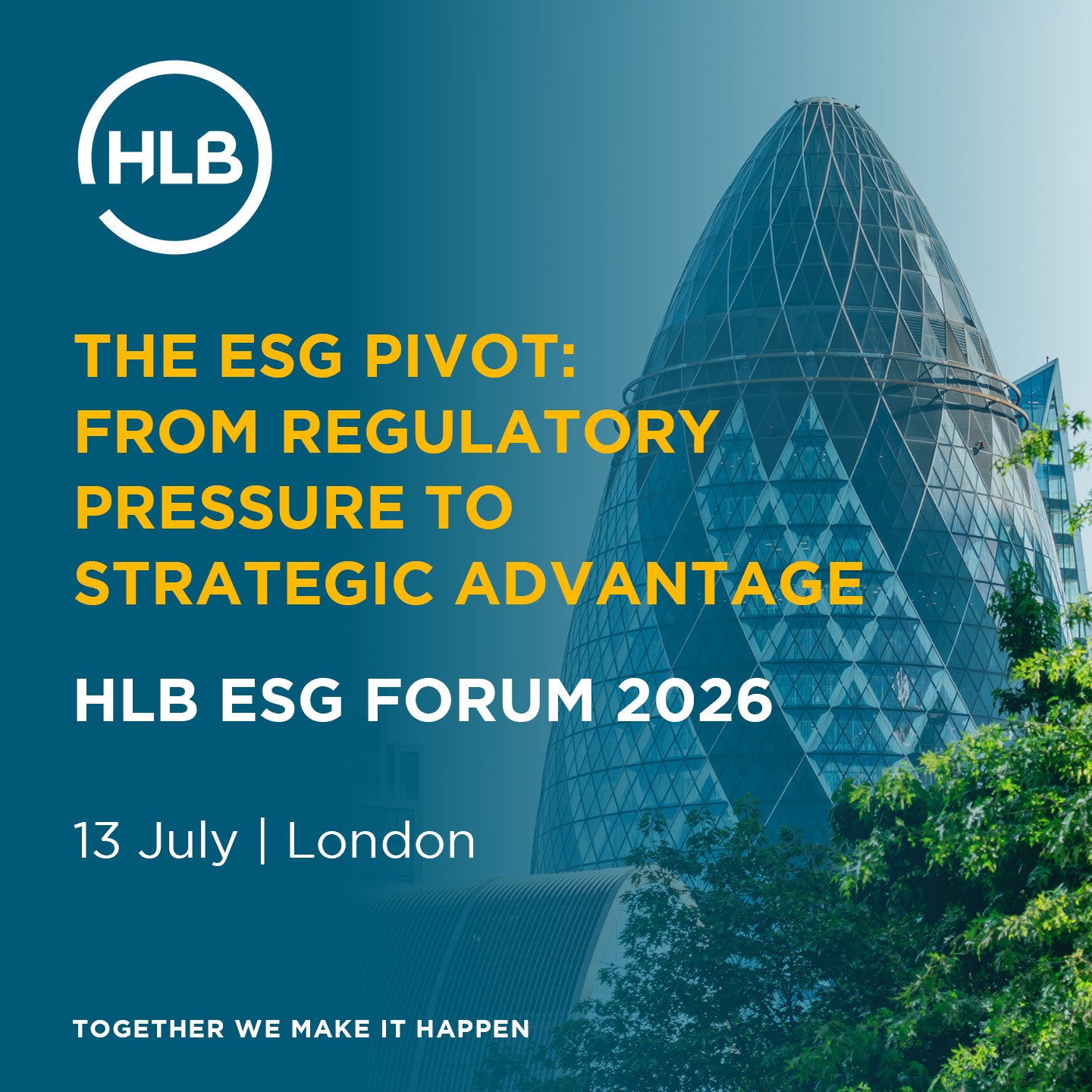
On 13 July, the global advisory and accounting network, HLB International, will host its 2026 ESG Forum at the Institute of Chartered Accountants in England and Wales (ICAEW) in London. Stakeholders from across the ESG ecosystem will come together to discuss how firms can move sustainability from a regulatory topic to a strategic lever that can create long-term business value.
Featuring a keynote, panel discussion and opportunities for networking, the event will delve in to themes mentioned above, exploring the evolution of ESG from a compliance issue to business imperative, the challenges associated with that, and how the different parts of the ESG ecosystem can work together to overcome those challenges.
This event is for everyone involved in developing and executing ESG strategy including CFOs, sustainability leaders, risk & compliance officers and strategy directors, as well as ESG tech founders, academics and responsible investors. It will conclude with a networking reception hosted by UK HLB member firm Menzies.
Find out more about the event and register to attend here

Frequently asked questions
-
What's changing for accounting with ESG developments?
ESG has become a business imperative – something that is vital for access to commercial opportunities, capital, talent and growth.