
Introducing new software to manage client assignments, run the practice, or support analysis can look like a manageable investment until a firm begins putting it to work. Hania Zeidan, Business Development Director, PA Global explains
Assessing the technology, preparing the data, adapting procedures, and training the team often fall to the same partners and staff already stretched by engagements and deadlines, leaving little time to lead the change or support its implementation.
Technology is advancing quickly, changing how local professional firms organize their work and serve clients. Keeping pace means finding the money, expertise, and time to develop capabilities while managing the daily demands of the practice. The cost extends beyond money to staff pressure, repeated effort, and postponed opportunities.
The work behind the investment
A subscription is only the beginning. Practice software, automation, and AI must fit the firm’s processes and work with its existing systems. Staff need training, and client information must be protected, while introducing a system can add to workloads before it begins to save time.
OECD’s April 2026 SME research identifies time constraints, maintenance costs, and skills gaps as barriers to effective implementation. IFAC’s guidance on small-firm digitalization highlights similar difficulties in assessing software and finding the expertise and resources to introduce it. [1, 2]
A data specialist or cybersecurity adviser may be needed for a project without enough recurring work to justify a permanent appointment, leaving the firm to fund external support or develop the expertise internally.
Keeping pace also means revisiting decisions as tools develop and systems need updating. A firm may face its next investment before it has realized the benefit of the previous one. Partners must decide what to fund and what can wait, while competing with practices that have more resources dedicated to development.
Faster work can create a review bottleneck
Technology can produce results faster, but experienced professionals still need to assess the underlying information, investigate exceptions, and review conclusions. Faster processing may therefore move the bottleneck to review, limiting the gains if review capacity does not increase.
A network response to the resource gap
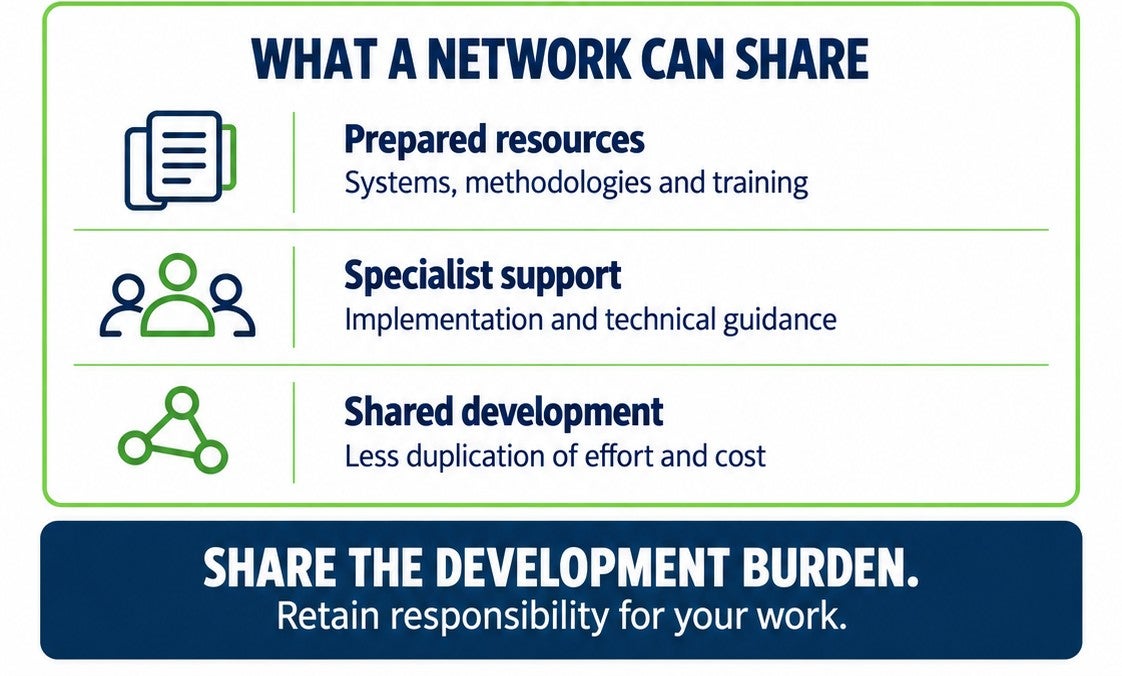
For local firms facing these pressures, network membership offers a practical way to access capabilities they cannot sustainably develop or maintain alone. The network can undertake development work on behalf of its members, spreading the effort and cost across firms and providing resources with the support needed to use them.
Systems, methodologies, training materials, and implementation guidance give members a prepared starting point they can tailor to their services and local requirements. For example, a document analysis resource could combine a tested workflow with training cases, review guidance, and instructions for handling exceptions, reducing the work each firm must undertake before implementation.
Access to specialists and qualified colleagues helps address the remaining capacity gap. Members can draw on expertise for implementation and technical issues, and additional staff for demanding assignments. Quality guidance and consultation support that work, allowing local firms to strengthen their capabilities while retaining ownership and responsibility for their engagements.
Making economies of scale work for members
Economies of scale arise when a network undertakes development work on behalf of its members, spreading the cost across firms that use the same core resources and providing the support needed to apply them. The benefits extend beyond money to less duplicated work, shorter preparation time, and access to expertise that a local practice may struggle to sustain internally.
PA Global’s Collective Capability approach supports this model by connecting expertise and resources across member firms. Generations in Partnership complements it by bringing experienced professionals’ judgment together with emerging professionals’ digital skills, allowing learning to move in both directions. PA Academy and the network’s digital platforms provide a foundation for putting that exchange into practice.
Membership delivers practical value when developed resources come with the know-how and support to apply them. Local firms can then focus on adapting capabilities to their clients and markets while retaining ownership and responsibility for their work. The cost of keeping pace remains, but each firm no longer has to carry the full development burden alone.
