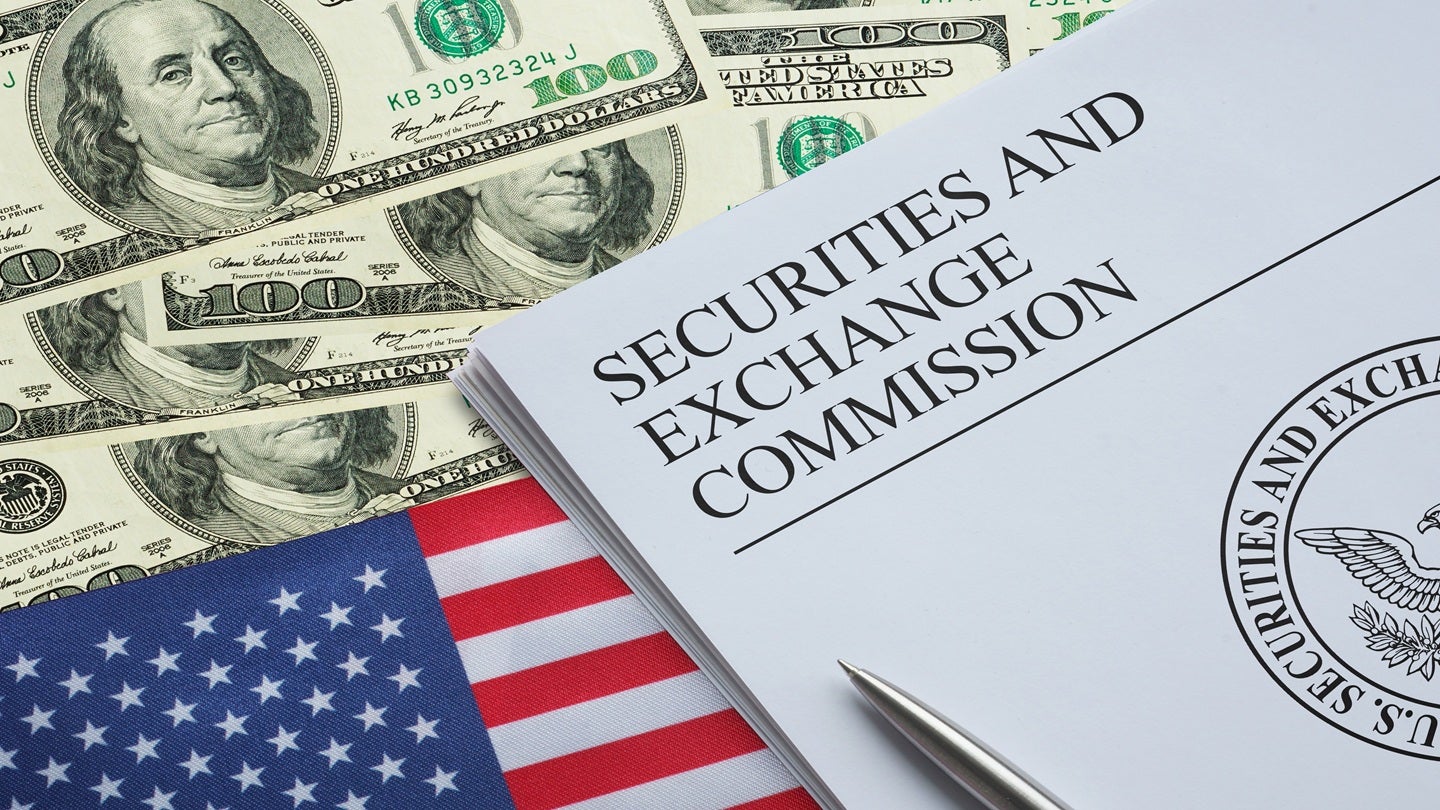
US accounting practices are seeking to protect more than $400m in fees that could be lost if the Securities and Exchange Commission (SEC) approves plans to ease post-Enron audit rules, the Financial Times reported.
The SEC has proposed exempting more US-listed companies from obtaining an auditor’s opinion on their internal financial controls, a requirement introduced in 2002 that created a major source of fees for accounting businesses.
Go deeper with GlobalData

Access deeper industry intelligence
Experience unmatched clarity with a single platform that combines unique data, AI, and human expertise.
Companies with a public float below $2bn would be exempt, compared with the current $700m threshold. New listings would also be exempt for their first five years, including technology companies valued at more than $1tn.
The proposal would remove the auditor-attestation requirement for a further 27% of public companies, or around 1,700 businesses.
The proposal is part of SEC chair Paul Atkins’ plan to “make IPOs great again”, which also includes ending quarterly reporting, and other deregulatory measures.
Atkins said the internal controls requirement discourages companies from going public by increasing audit costs and complexity.
The Sarbanes-Oxley Act requires US-listed companies to certify that they maintain controls designed to prevent fraud. Around half must also obtain auditor confirmation.
US Government Accountability Office (GAO) analysis found that crossing the current threshold increased audit fees by 13% at the median company. Other studies and surveys indicate that the additional cost may be higher.
Accounting companies do not report internal controls fees separately because the work is integrated into the wider audit.
The ‘Big Four’ companies – EY, Deloitte, PricewaterhouseCoopers and KPMG – along with smaller accounting practices and several investor groups have opposed the proposed changes.
The Center for Audit Quality, which represents the largest accounting businesses, has urged the SEC to assess the rollback.